Refrigeration Controller Attacks: CISA Warns as XWEB Units Join Botnet
CISA, FBI, HHS, USDA and DOT warn that attackers are hijacking internet-exposed refrigeration controllers after hundreds of European supermarkets saw freezers forced into heating cycles. SecurityScorecard found Copeland XWEB units relaying spam and proxy traffic.

Threat card
- Threat type
- Cyber Attacks
- Disclosed
- Nov 2, 2026
- Affected
- Internet-exposed industrial refrigeration and cold-chain controllers, including Dixell/Copeland XWEB PRO and EVO and Danfoss StoreView; XWEB firmware vulnerable to CVE-2026-25085
The short version
- Attackers changed settings on refrigeration controllers at hundreds of European supermarkets, pushing some temperatures to 50 degrees Celsius.
- CISA, FBI, HHS, USDA and DOT urged operators to harden industrial refrigeration and cold-chain monitoring systems.
- SecurityScorecard found compromised Copeland XWEB controllers working as SMTP spam senders, a VPN tunnel gateway and a residential proxy exit.
- CVE-2026-25085, a CVSS 8.6 pre-auth login bypass in XWEB, is the likely way in, but no actor has been named.
Refrigeration controller attacks have moved from a European supermarket problem to a formal US government warning. CISA, the FBI, HHS, USDA and DOT now urge operators to harden industrial refrigeration and cold-chain monitoring systems after attackers forced freezers at hundreds of European stores into heating and defrost cycles. Separately, SecurityScorecard found exposed Copeland XWEB controllers being used as spam senders and proxy nodes, with CVE-2026-25085 the likely way in. Anyone running internet-facing refrigeration controllers should take them offline from the internet today.
What happened
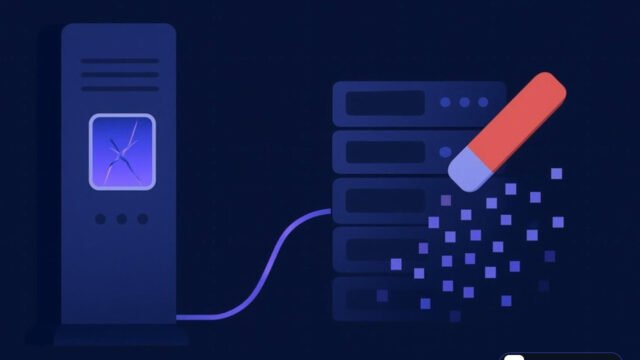
Attackers are reaching internet-exposed refrigeration controllers and changing their settings. In Europe they pushed some store temperatures as high as 50 degrees Celsius and forced units into defrost, spoiling food. US agencies now warn the same tactics could cause fires and inventory loss, while researchers found other controllers enrolled in a spam and proxy botnet.
According to The Hacker News report on the joint warning, targets ranged from major chains to small grocers and butchers in Belgium, Estonia, Finland, France, Germany, Ireland, Italy, Luxembourg, the Netherlands, Portugal, Sweden and the UK. The French Blood Establishment (EFS) confirmed an incident at a refrigeration equipment provider that raised temperature and defrost settings to “extremely high levels” at three plasma storage facilities.
The joint CISA, FBI, HHS, USDA and DOT guidance says threat actors are targeting these systems worldwide and may exploit unpatched or internet-accessible controllers to “force units into continuous heating and defrost cycles”. FBI Cyber Branch Operations Director Brett Leatherman described the systems as “attractive targets for malicious cyber actors”.
Timeline
| Date (UTC where known) | Event |
|---|---|
| October 2026 | SecurityScorecard documents a similar refrigeration attack in France. |
| 9 Oct 2026 | Censys counts 3,004 exposed Danfoss StoreView and 3,708 exposed Copeland/Dixell XWEB interfaces. |
| 2 to 3 Nov 2026 | International media report attacks on supermarket fridges and freezers across Europe. |
| 5 Nov 2026 | SecurityScorecard STRIKE publishes its XWEB botnet analysis; Censys counts fall to 708 StoreView and 2,420 XWEB. |
| 9 Nov 2026 | CISA, FBI, HHS, USDA and DOT warning on refrigeration and cold-chain systems is reported. |
How the attack works
Initial access: exposed web interfaces
The common thread is controllers reachable from the internet. XWEB PRO units run supermarket and cold-storage freezer racks over Modbus and host a web interface on ports 8015 and 443. The joint guidance lists authentication bypasses, arbitrary code injection and weak configurations as the likely methods.
Root cause: CVE-2026-25085 login bypass
SecurityScorecard’s STRIKE team analysis names CVE-2026-25085 (CVSS 8.6) as “the likely way in”, while stressing it has not confirmed this in observed compromises. The bug sits in the Lua user_authenticate login check: an unrecognised login type returns an empty result, which Lua treats as success, so the attacker is logged in without credentials. CISA advisory ICSA-26-057-10, based on Claroty Team82 research, covers 23 XWEB flaws in total, including an admin password derivable from the device MAC address and 19 command injection bugs.
Impact on refrigeration
Once inside, attackers change setpoints and defrost schedules. The agencies warn this can shorten equipment life, create fire hazards, spoil inventory and harm consumers who buy products stored unsafely. A denial of service can also remove visibility of current temperatures, so staff do not see the problem until stock is lost.
Monetisation: spam, tunnels and proxies
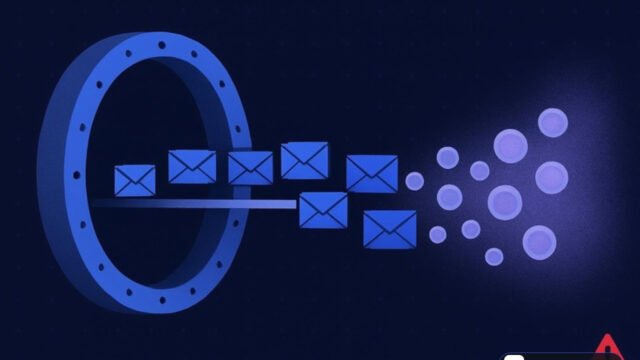
SecurityScorecard found compromised XWEB panels doing three jobs. One relayed third-party OpenVPN and IPsec traffic as a tunnel gateway. One acted as a residential proxy exit, with WireGuard, STUN, MQTT and DNS traffic and 10,643 peers in 17 hours. Nine IPs, three of them confirmed XWEB controllers, sent outbound mail to ports 25, 465 and 587 with no inbound mail, using tiny flows of about 250 bytes, against 1,041 SMTP targets.
MITRE ATT&CK mapping
| Tactic | Technique (ID) | How it was used here |
|---|---|---|
| Initial Access (ICS) | Internet Accessible Device (T0883) | Controllers with web interfaces exposed to the internet. |
| Initial Access | Exploit Public-Facing Application (T1190) | Likely use of the CVE-2026-25085 login bypass (not confirmed). |
| Impair Process Control (ICS) | Modify Parameter (T0836) | Temperature and defrost settings changed to force heating cycles. |
| Impact (ICS) | Denial of View (T0815) | Agencies warn DoS can hide current temperatures from operators. |
| Impact (ICS) | Loss of Productivity and Revenue (T0828) | Spoiled food and plasma storage disruption. |
| Impact | Resource Hijacking (T1496) | Controllers used to send spam and carry proxy and tunnel traffic. |
| Command and Control | Proxy (T1090) | One panel served as a residential proxy exit, another as a tunnel gateway. |
Who is behind it
Not yet attributed. Neither the US agencies nor SecurityScorecard have named an actor. STRIKE says the overlap in SMTP targets (508 targets hit by two or more nodes, and 295 shared by the top three) is consistent with a single operator, but it has not linked the botnet to the October French attack or the November European supermarket attacks. The two activity sets may be separate actors exploiting the same exposure.
Affected products and versions
| Product | Affected | Fixed | CVE | CVSS |
|---|---|---|---|---|
| Dixell/Copeland XWEB PRO | Old firmware exposed online; versions not listed by SecurityScorecard | Per CISA ICSA-26-057-10 | CVE-2026-25085 (plus 22 other XWEB flaws) | 8.6 |
| Dixell/Copeland XWEB EVO | Seen on one compromised node | Per CISA ICSA-26-057-10 | Not specified | Not disclosed |
| Danfoss StoreView | Internet-exposed instances, mostly in France | Not disclosed | Not disclosed | Not disclosed |
Indicators of compromise
SecurityScorecard rates these low to medium confidence. Most IPs are victim controllers or abused infrastructure, not attacker assets, so use them for hunting and notification rather than blind blocking.
| Type | Indicator (defanged) | Context |
|---|---|---|
| IPv4 | 197.188.223[.]161 |
XWEB panel repurposed as OpenVPN/IPsec tunnel gateway |
| IPv4 | 168.195.122[.]22 |
XWEB panel used as residential proxy exit |
| IP:port | 160.19.119[.]226:443 |
Tunnel endpoint for the gateway panel, about 1.24 million flows |
| IPv4 | 85.29.149[.]211 |
SMTP spam node, XWEB PRO certificate confirmed |
| IPv4 | 78.21.151[.]21 |
SMTP spam node, XWEB EVO title confirmed |
| IPv4 | 95.229.5[.]248 |
SMTP spam node, Dixell certificate confirmed |
| IPv4 | 181.192.79[.]179, 151.3.178[.]94, 213.221.44[.]60 |
SMTP spam nodes with 612, 533 and 531 targets |
| IPv4 | 178.244.215[.]186, 84.1.34[.]242, 90.0.156[.]128 |
Further SMTP spam nodes |
| IP:port | 46.255.231[.]42:993, 143.244.202[.]96:2525 |
Weak shared endpoints across spam nodes, possible C2 (low confidence) |
Detection and hunting
First, find your exposure. Scan your own external ranges for XWEB and StoreView interfaces on ports 8015, 80 and 443, matching on page title or certificate. SecurityScorecard warns against matching the substring “xweb” alone, because it also hits unrelated hosts.
Second, watch the network. An exposed XWEB banner combined with outbound fan-out on 25, 465 and 587 and no inbound mail is a moderate-confidence compromise signal. Flow data showing VPN, WireGuard or STUN traffic from an OT or building management segment is just as suspicious. Third, watch the process: alert on setpoint and defrost schedule changes outside maintenance windows and on any controller login from an internet address.
Mitigation and response
- Remove refrigeration controllers from direct internet exposure now. If remote access is needed, put it behind a VPN or remote access gateway with MFA.
- Update XWEB firmware per CISA advisory ICSA-26-057-10. SecurityScorecard notes updates may require taking equipment offline, so plan a window with the refrigeration contractor.
- Change default and MAC-derived passwords, and retire legacy controllers that can no longer be patched.
- Isolate OT devices from corporate and guest networks and block outbound SMTP from OT segments.
- Check controllers that were exposed for changed setpoints, unknown accounts and unexpected outbound traffic, and reset them to known-good configuration.
- Keep manual temperature checks in place until monitoring is trusted again, since attackers can blind dashboards.
Analyst take
This is what OT risk looks like for most companies: not a power grid, but a freezer controller a contractor exposed years ago. The exposure numbers are falling fast, which shows the warnings are working, but thousands of XWEB interfaces were still reachable on 5 November. The botnet finding matters because it shows these devices are being monetised quietly long before anyone touches the temperature, much like the network gear abused in the Zyxel GS1900 switch campaign.
Food retail, cold-chain logistics, pharmacies and blood and plasma services should worry most, because a temperature excursion turns directly into product loss and safety risk. The fix is unglamorous: an asset inventory, no direct internet exposure, patched firmware and alerts on setpoint changes. Botnets built from forgotten devices, as with the XCPE Android TV box botnet, keep proving that the cheapest box on the network is often the first one lost.
What to do now
0 of 5 done
Questions readers ask
How are hackers attacking supermarket refrigerators?
They reach internet-exposed refrigeration controllers, likely through authentication bypasses, code injection or weak passwords, and change settings to force heating and defrost cycles.
What is CVE-2026-25085?
A CVSS 8.6 pre-authentication login bypass in Dixell/Copeland XWEB controllers, where an unrecognised login type is treated as a successful login.
How do I know if my XWEB controller is compromised?
Look for an internet-exposed XWEB interface combined with outbound SMTP traffic on ports 25, 465 or 587 and no inbound mail, plus unexplained setpoint changes.
Sources
- CISA: US government partners urge hardening of industrial refrigeration and cold-chain monitoring systemscisa.gov
- CISA: ICS advisory ICSA-26-057-10 (Dixell/Copeland XWEB)cisa.gov
- SecurityScorecard STRIKE: A Dish Served Lukewarm, the Refrigerator Botnetsecurityscorecard.com
- The Hacker News: US agencies warn refrigeration controller attacks could cause fires and inventory lossesthehackernews.com
- EFS: incident at a refrigeration equipment providerpresse.efs.sante.fr
One short email when something serious breaks.
Threatspedia covers major cyber threats only, verified against primary sources. Read our editorial policy, or report a correction.