N-able N-central Able2Shell: 33 Alleged Zero-Days Force RMM Shutdown
N-able pulled hosted N-central offline and told on-premises customers to shut their servers down after a researcher published Able2Shell: 33 alleged N-central zero-days with exploit code, chained into three RCE paths and one root escalation. No patch or CVEs yet.
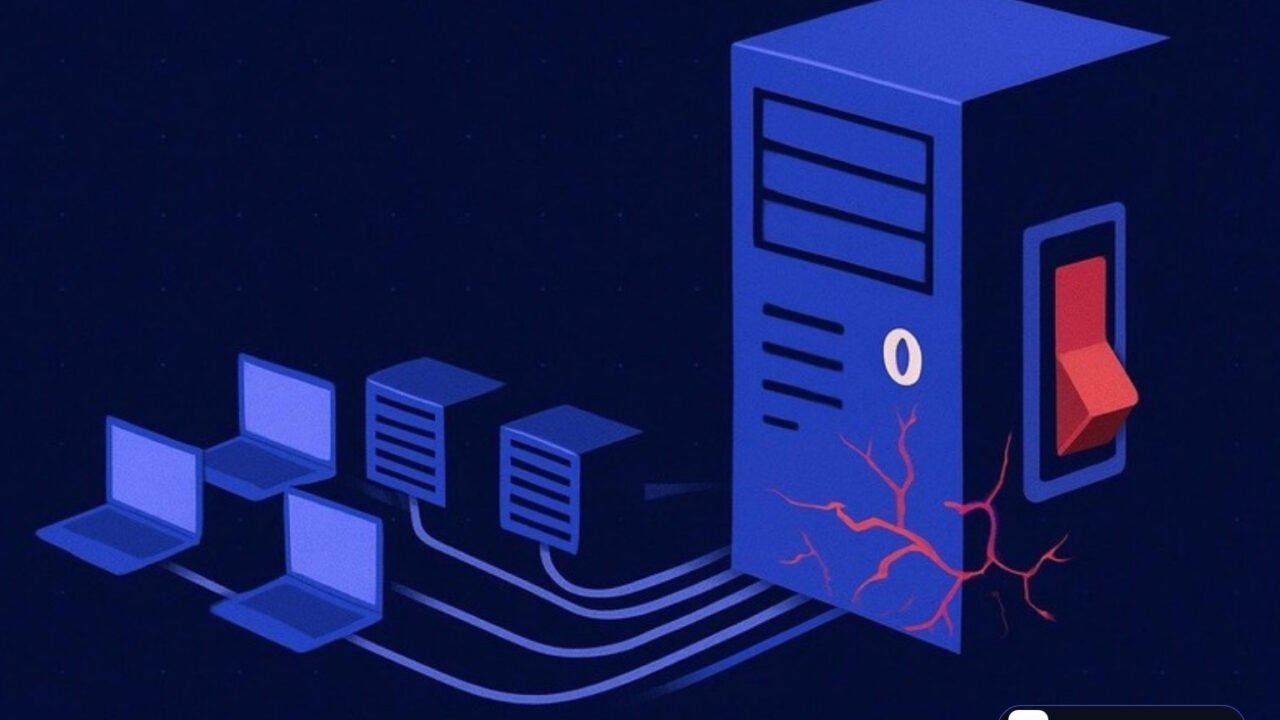
Threat card
- Threat type
- Supply Chain
- Disclosed
- Nov 9, 2026
- Affected
- N-able N-central Appliance 2026.4.0.31 (earlier versions possibly affected) and hosted N-central
The short version
- A researcher published Able2Shell, 33 alleged N-central vulnerabilities with Python proof-of-concept code.
- Huntress says they chain into three remote code execution paths and one escalation to root.
- N-able took hosted N-central offline and told on-premises customers to shut down servers until a hotfix is confirmed.
- No CVEs, CVSS scores or IOCs exist yet, and N-able reported no active exploitation as of 9 November.
On 9 November 2026, N-able took its hosted N-central RMM platform offline worldwide after an independent researcher published Able2Shell, a set of 33 alleged N-able N-central zero-days with technical write-ups and Python proof-of-concept code. Huntress says the bugs chain into three remote code execution paths and one escalation to root on N-central Appliance 2026.4.0.31. N-able reported no active exploitation as of 15:15 UTC on 9 November, but a hotfix is not yet out. On-premises servers should stay offline until N-able says otherwise.
What happened
A GitHub account called “Oracle-Security” released Able2Shell, 33 alleged vulnerabilities in N-able’s N-central remote monitoring and management platform, with working-style exploit code. N-able responded by shutting down hosted N-central in the Americas, Europe and Asia-Pacific and telling self-hosted customers to take servers offline until a hotfix is confirmed safe.
The scale of the response reflects what N-central is. Managed service providers use it to run scripts, push software and open remote sessions on thousands of client endpoints. According to Huntress’s analysis of the Able2Shell exploit chains, three of the four chains lead to RCE and one to root privilege escalation. Field Effect stresses that the claims are still alleged and not independently confirmed, and Cyber Security News notes the public code may not work against every installation.
No CVE identifiers, CVSS scores, affected-version list or fixed versions had been published for Able2Shell as of 9 November. N-able has said a hotfix is in preparation but has given no firm ETA.
Timeline
| Date (2026, UTC where known) | Event |
|---|---|
| July to August | Attackers exploit CVE-2026-18577, an N-central authentication bypass and incomplete patch for CVE-2026-18556, to gain admin access and pivot to managed systems. |
| September | N-able fixes CVE-2026-86206 and CVE-2026-86207, then hotfixes CVE-2026-86218, an exploited pre-auth RCE (CVSS 10.0) later added to CISA KEV. |
| 8 November | Start of the log review window Huntress recommends for unauthorised access. |
| 9 November | Able2Shell published on GitHub. N-able takes hosted N-central offline and advises on-premises customers to do the same. |
| 9 November, 15:15 | N-able states it has not seen active exploitation of the vulnerabilities. |
| 10 November | Hotfix still in development; outage ongoing per N-able’s N-central status page. |
How the attack works
Initial access: unauthenticated XXE to RCE
The disclosure includes both authenticated and unauthenticated weaknesses spread across multiple N-central components. The one bug class named publicly is XML External Entity (XXE) injection. A proof-of-concept script, anonymous_xxe_nable_rce.py, reportedly shows an unauthenticated XXE that chains into remote code execution. XXE flaws let an attacker make the XML parser fetch external or local resources, which can expose files and secrets or open a path to further code execution.
Privilege escalation to root
The fourth chain starts from lower-privileged access and escalates to root on the appliance. Field Effect’s write-up says several chains begin as a low-privileged user and climb through additional flaws to administrative or root-level control of the platform.
Credential access, persistence and defence evasion
The claimed impacts listed by Field Effect’s review of the alleged N-central zero-days include credential disclosure, administrator account creation, configuration changes, account enumeration, audit record manipulation, remote-control session disruption and device impersonation. Taken together, that is the full kit an intruder needs to persist quietly in an RMM server and tamper with the logs that would reveal it.
Impact: the RMM becomes the delivery system
The real risk sits downstream. With admin or root control, an attacker can use legitimate N-central functions against every managed system: deploy scripts, push software and open remote sessions. Huntress notes that attackers “spraying” downstream environments with unauthorised scripts was already seen in earlier N-central exploitation this year.
MITRE ATT&CK mapping
Mapped from the claimed capabilities in the disclosure and from earlier N-central exploitation; no in-the-wild Able2Shell activity has been confirmed.
| Tactic | Technique (ID) | How it applies here |
|---|---|---|
| Initial Access | Exploit Public-Facing Application (T1190) | Unauthenticated XXE chained to RCE on an internet-reachable N-central server. |
| Privilege Escalation | Exploitation for Privilege Escalation (T1068) | One chain escalates from lower-privileged access to root. |
| Persistence | Create Account (T1136) | Claimed ability to create administrator accounts. |
| Credential Access | Unsecured Credentials (T1552) | Claimed credential disclosure from the platform. |
| Defense Evasion | Indicator Removal (T1070) | Claimed audit record manipulation. |
| Lateral Movement, Execution | Software Deployment Tools (T1072) | Using N-central script and software deployment against managed devices, as seen in earlier N-central abuse. |
| Initial Access | Trusted Relationship (T1199) | MSP-to-client trust lets a compromised RMM reach customer networks. |
Who is behind it
Able2Shell is a researcher disclosure, not an attributed attack. The material was posted by the GitHub account “Oracle-Security” with no real name given. No threat actor has been linked to exploitation of these specific bugs, and N-able reports none observed so far.
N-central is, however, an established target. The July and August exploitation of CVE-2026-18577 and the September exploitation of CVE-2026-86218 show that crews are already tooled to hit this platform. With public PoC code now available, that window could close quickly.
Affected products and versions
| Product | Affected | Fixed | CVE | CVSS |
|---|---|---|---|---|
| N-able N-central Appliance (on-premises) | 2026.4.0.31; earlier versions possibly affected, unconfirmed | Hotfix in development | Not yet assigned | Not disclosed |
| N-able hosted N-central | Taken offline by N-able on 9 November | Pending N-able confirmation | Not yet assigned | Not disclosed |
| Earlier, separate flaw: N-central | Before September 2026 hotfix | September 2026 hotfix | CVE-2026-86218 | 10.0 |
The September CVE-2026-86218 hotfix does not protect against Able2Shell, and live hotfixes may not change the displayed version number, so do not use the version string alone as proof you are safe.
Indicators of compromise
No IOCs have been published for Able2Shell. Expect them, if any, in N-able’s advisory and status updates. Hunt on behaviour instead:
| Type | Indicator | Context |
|---|---|---|
| Behavioural | New or unexpected N-central administrator accounts | Matches the claimed admin account creation capability. |
| Behavioural | Scripts or software deployed from N-central that nobody scheduled | Seen in earlier N-central exploitation against downstream clients. |
| Behavioural | Remote-control sessions at odd hours or from unknown operators | Possible hands-on access through the RMM. |
| Behavioural | Gaps or edits in N-central audit logs | Matches the claimed audit record manipulation. |
Detection and hunting
Start with N-central authentication and login logs from 8 November onward, as Huntress recommends, and focus on activity in the hours before your server went offline. Review administrator account creation, privilege and role changes, configuration and automation policy changes, software deployments, script execution and remote-control sessions. Because the disclosure claims audit records can be altered, compare N-central’s own logs with independent sources: reverse proxy or firewall logs in front of the appliance, and the operating system logs of the appliance host.
Then hunt on the managed side. On client endpoints, look for N-central agent processes spawning command shells, PowerShell or new service installs that do not match known change tickets. On the network, check whether the N-central management interface was reachable from the internet and log any inbound requests carrying XML payloads from unfamiliar sources. If you find unauthorised activity, scope the incident to every customer network the server manages, not just the appliance.
Mitigation and response
- Keep on-premises N-central servers offline until N-able confirms it is safe to restore. Hosted customers should follow N-able’s status page.
- Apply the hotfix only with N-able’s explicit recovery guidance, since the version number may not change.
- Review authentication, admin account, deployment and remote-session activity from 8 November onward, then hunt on managed endpoints.
- If anything looks wrong, rotate N-central admin, service account and API integration credentials, plus any secrets stored in the platform.
- Map what N-central can touch (domain controllers, virtualisation, backup, identity and security tools) and harden those trust paths.
- Restrict the management interface to dedicated admin networks and keep elevated monitoring of N-central-originated activity after restore.
Analyst take
An RMM platform is the most valuable single server in an MSP’s estate, because it is a signed, trusted delivery system into every client. That is why a researcher dump with PoC code was enough for N-able to switch off its cloud service across three regions. It is a defensible call: the alternative was a race between a hotfix and attackers who had already exploited N-central twice this year. The same supply chain logic drove incidents we covered such as the NIKKE launcher CDN compromise and the hijacked DebugBear script at Polymarket.
MSPs and their customers carry the most risk, and customers often do not know which RMM their provider runs. If you outsource IT, ask your MSP today whether it uses N-central and what it has done since 9 November. If you are the MSP, assume the downtime is the cheap part; the expensive part is proving no one used the platform against your clients before the switch was flipped.
What to do now
0 of 6 done
Questions readers ask
What is Able2Shell?
Able2Shell is a public disclosure of 33 alleged N-able N-central vulnerabilities with exploit code, chained into three RCE paths and one root escalation.
Is N-central Able2Shell being exploited?
N-able said it had not seen active exploitation as of 15:15 UTC on 9 November 2026, but public PoC code raises the risk.
Should I turn off my N-central server?
Yes. N-able advises on-premises customers to keep servers offline until it confirms they can be safely restored.
Sources
- Huntress: N-able Disables Cloud Services Following Disclosure of Able2Shell Exploit Chainshuntress.com
- N-able: N-central status eventuptime.n-able.com
- Field Effect: N-central offline after alleged zero-daysfieldeffect.com
- Cyber Security News: N-able Takes N-central Servers Offline Worldwidecybersecuritynews.com
One short email when something serious breaks.
Threatspedia covers major cyber threats only, verified against primary sources. Read our editorial policy, or report a correction.