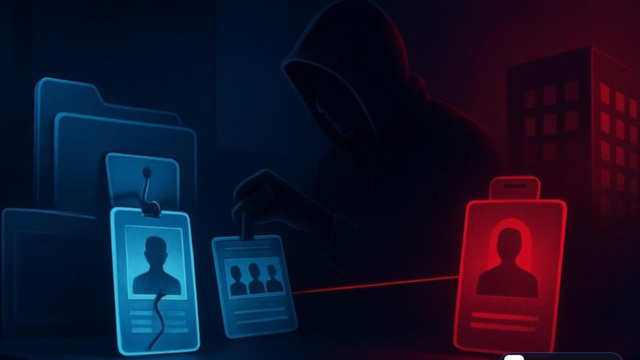
DigiCert Data Breach: Exposed Archive Leaked Customer ID Documents
DigiCert says a 2025 network migration exposed an internal archive to the internet, where a self-registered account read customer contact data and some passports and driver's licences between 27 June and 2 July 2026. Certificates were not affected.
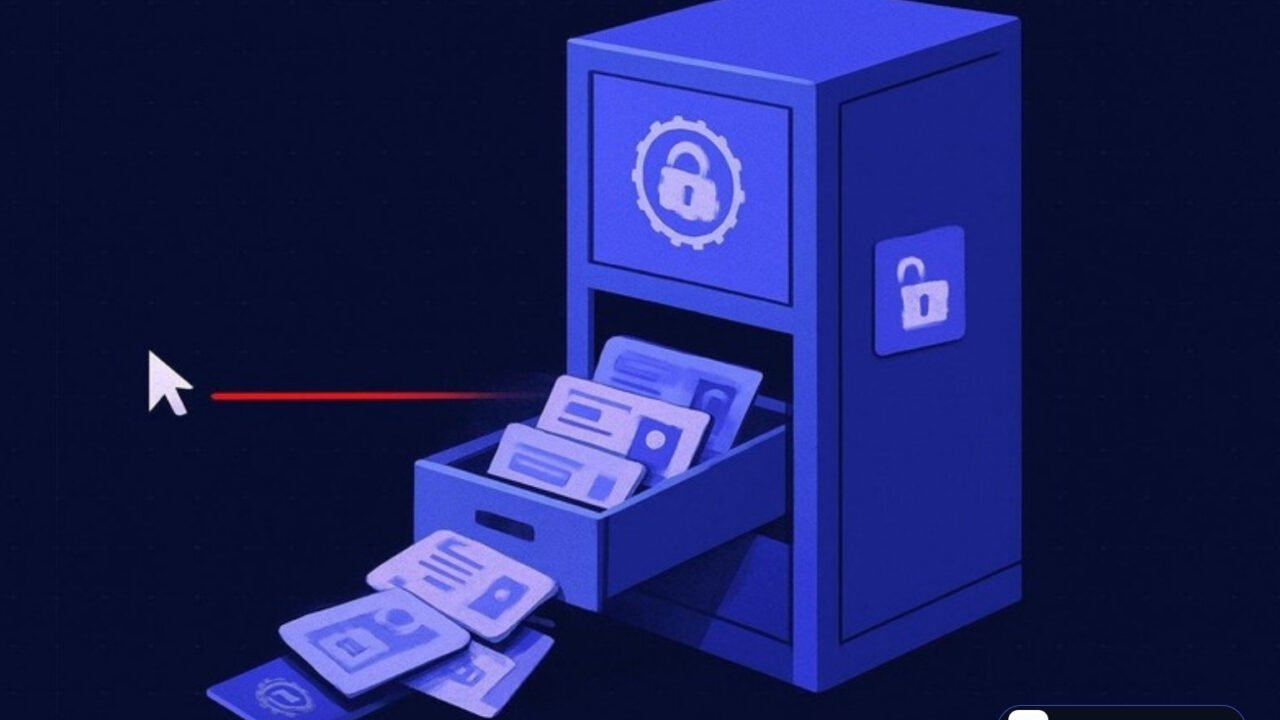
Threat card
- Threat type
- Cloud Security
- Disclosed
- Oct 20, 2026
- Affected
- DigiCert internal archive of customer validation data: contact details and some uploaded ID documents (CA, CertCentral and DigiCert ONE unaffected)
The short version
- A February 2025 migration made an internal DigiCert archive system reachable from the internet.
- A self-registration flow without MFA let an outsider create an account that could read archived customer data.
- Data was read between 27 June and 2 July 2026, including names, contact details and some passports, driver's licences and utility bills.
- DigiCert says no certificates, CA systems or customer credentials were affected.
The DigiCert data breach is a textbook case of a network change quietly becoming a security incident. In its full incident report to Mozilla’s CA program, the certificate authority says a February 2025 migration made an internal archive system reachable from the internet. An outsider self-registered an account and read archived customer data between 27 June and 2 July 2026. Names and business contact details were exposed, and for some customers so were identity documents such as passports and driver’s licences. DigiCert says certificate issuance was never touched. Customers who submitted ID documents for validation should treat the copies as exposed.
What happened
An internal DigiCert business system that archives customer validation information was moved from a VPN-restricted segment to an externally reachable availability zone on 4 February 2025. A self-registration feature, never meant for that system, let outsiders create accounts that skipped MFA and could read archived data. One such account read a subset of records from 27 June to 2 July 2026.
DigiCert first logged the event as an account-creation issue rather than a data-access event. It only confirmed on 19 October 2026 that archived data had been read, and it began sending notification letters in early November, as BleepingComputer reported. Cloud architect Fabian Bader shared a copy of the DigiCert breach notification on X after receiving one.
Timeline
| Date (2025 to 2026) | Event |
|---|---|
| 2025-02-04 | Business system moved from a VPN-restricted segment to an externally accessible availability zone during an infrastructure migration. |
| 2026-06-18 | Internal team sees non-DigiCert accounts on the system, concludes they have no data access, and puts the system behind a WAF that blocks new external sign-ups. |
| 2026-06-21 | Report from DigiCert’s managed security research program says outsiders can create accounts. |
| 2026-06-24 | DigiCert verifies the account creation ability. |
| 2026-06-27 | Start of the data access window, established later from file access and request volume logs. |
| 2026-07-02 | Authorization patch released: accounts with no assigned application now get HTTP 401. End of the access window. |
| 2026-07-09 | WAF restricts the system’s hostnames to VPN traffic, except approved endpoints. |
| 2026-08-31 | External penetration test of the system completed. |
| 2026-10-12 | DigiCert first suspects archived data was accessed and reopens the investigation. |
| 2026-10-19 | Reportable event confirmed under root program rules. |
| 2026-10-20 | Preliminary incident report filed on Mozilla Bugzilla. |
| 2026-10-24 | Self-registration disabled on all instances; remaining endpoints moved to private-IP load balancers. |
| 2026-11-05 | Customer notifications become public; full report updated. |
How the attack works
No exploit chain or malware was involved. The intrusion was the product of three overlapping control failures, which DigiCert documents with a Five Whys root cause analysis. Each one is common in enterprise estates, which is why this incident deserves attention beyond DigiCert’s customer base.
Initial access: an internal app left on the internet
The archive system was only ever designed for staff on the VPN. The February 2025 move placed it in an availability zone that the internet could reach. DigiCert says the change was treated as an infrastructure change rather than a security change, so it never triggered a review of the new attack surface.
Account creation: a borrowed sign-up flow
The system runs its own instance of an account manager platform that DigiCert also uses for customer-facing products. That platform includes an optional self-service registration flow meant for customer sign-up elsewhere. It was inadvertently available on this instance too. Accounts created through it did not get MFA, because MFA only applied once an account was assigned to an application that required it.
Collection: read-only access by default
Self-registered accounts were placed in read-only mode, but the authorization model never contemplated unassigned users. Those accounts could still read archived data. This is a classic broken access control flaw: authorization was effectively delegated to network position. DigiCert’s own lesson learned says exactly that: “Authorization for a business system must not be delegated to its network position.”
Impact limits
The account could not write records, act as a validation approver, or request or issue certificates. DigiCert says the CA systems run on separate network segments, and a log review found no validation, issuance or revocation activity tied to the account.
MITRE ATT&CK mapping
| Tactic | Technique (ID) | How it was used here |
|---|---|---|
| Initial Access | Exploit Public-Facing Application (T1190) | An internet-reachable internal app with a missing authorization check on unassigned accounts. |
| Persistence | Create Account (T1136) | Outsider used the exposed self-registration endpoint to create an account that bypassed MFA. |
| Collection | Data from Information Repositories (T1213) | Read-only access to archived customer contact records and uploaded ID documents. |
Who is behind it
Not yet attributed. DigiCert’s report describes a single unauthorized account and does not name an actor, motive or infrastructure. No extortion claim or leak site listing has been reported in the sources reviewed. The separate account seen in June was initially judged harmless, and DigiCert also received a report through its managed security research program, but the report does not link the data access to that researcher.
Affected products and versions
| Data types exposed | Records | Population affected |
|---|---|---|
| Names, business email addresses, phone numbers, business addresses | Not disclosed (“a small proportion of archived data”) | DigiCert customer representatives whose records sat in the archive |
| Customer-provided ID documents: driver’s licences, passports, utility bills or other documents with name and address | Not disclosed (“a small minority of customer accounts”) | Customers who uploaded documents for identity validation; DigiCert is still reviewing who is affected |
| Not affected: CA services, CertCentral, DigiCert ONE, login credentials, issued certificates | 0 certificates | No action needed on active certificates, per DigiCert |
A commenter on the Bugzilla thread has asked DigiCert to state the size of the exposed data set. At the time of writing, the number has not been published.
Indicators of compromise
DigiCert has not published IOCs, and none are expected, since the access came through a legitimate (if unintended) sign-up flow. Defenders running similar setups should instead hunt for these behaviours:
- New accounts on internal tools created through a self-registration endpoint rather than your provisioning workflow.
- Accounts with no assigned application or role that still generate successful data reads.
- Read request volume spikes on archive or document stores, especially bulk file downloads from a single session.
- Internal hostnames that resolve or answer from outside the corporate network after a migration.
Detection and hunting
Start with an external attack surface scan of every hostname that should be internal. DigiCert’s own action list ends with exactly this check: an audit confirming no business system origin server is externally accessible. Compare cloud security group and load balancer changes since your last migration against the asset inventory.
In identity provider logs, search for user creation events that did not come from your HR or provisioning source, and for sign-ins that completed without an MFA claim. On the application side, alert on any request from an account lacking an application assignment, and on any HTTP 200 response to such an account. DigiCert added application-level alerts on file access and request volume after the incident, and notes that its new volume alert would have fired on the 1 July 2026 traffic.
Mitigation and response
- If you are a DigiCert customer, read any notice you receive and assume uploaded ID copies are exposed. Watch for targeted phishing that cites your certificate orders or validation history.
- Treat any identity document you sent for organisation or extended validation as compromised for fraud monitoring purposes; consider credit or identity monitoring where available.
- Expect lures impersonating DigiCert validation staff. Verify any request for new documents through your CertCentral account, not email links.
- For your own estate, require a security sign-off for any network accessibility change to internal tools, as DigiCert now does.
- Disable unused self-registration features on identity platforms, and enforce authorization per endpoint by application assignment and role.
- Add volume and file access alerts that do not depend on the WAF, and route them to the SOC.
Analyst take
The striking part is not the exposure but the roughly 17 months it sat open and the four months between first sighting and confirmation. DigiCert saw strange accounts in June, fixed the flaw within two weeks, and still assumed no data had been read. That assumption is the real failure, and it is one many teams make when an account “has no app assigned”. Logs that retain read activity are what let DigiCert reconstruct the window at all, which is a point in its favour.
For defenders, the pattern matches other recent incidents we tracked, such as the Chainalysis breach that exposed platform user data, where internal tooling became the path to customer records. Certificate authorities hold validation evidence that is ideal fuel for impersonation and fraud, and the Bugzilla thread shows two other CAs, TWCA and D-Trust, filed archive-related incidents in the same month. Expect browser root programs to push harder on how CAs store and retain validation documents. Organisations relying on any third party for identity proofing should ask the same question, as the Polymarket DebugBear incident showed for third-party scripts: where does our data sit, and who checked the network change?
What to do now
0 of 6 done
Questions readers ask
Were DigiCert certificates compromised in the breach?
No. DigiCert says the account had read-only access to archived data and could not issue, validate or revoke certificates, and logs show no such activity.
What data was exposed in the DigiCert data breach?
Names, business email addresses, phone numbers and business addresses, plus for a small minority of accounts an uploaded ID document such as a passport, driver's licence or utility bill.
How did the DigiCert breach happen?
A 2025 migration exposed an internal system to the internet, and a self-registration feature let an outsider create an account without MFA that could read archived data.
Sources
- Mozilla Bugzilla: DigiCert: Unauthorized access to business systembugzilla.mozilla.org
- BleepingComputer: DigiCert data breach exposes customer information, identity documentsbleepingcomputer.com
One short email when something serious breaks.
Threatspedia covers major cyber threats only, verified against primary sources. Read our editorial policy, or report a correction.