Cold Relic Hackers Breach Second U.S. Firm via Stolen Data
Cold Relic hackers, the Russian group once called COLDRIVER, used data stolen from one U.S. firm to phish and breach a second. What defenders should check.
Threat card
- Status
- Under investigation
- Threat type
- Nation-State
- Disclosed
- Nov 18, 2026
- Affected
- Two unnamed U.S. organizations / Google Workspace and Microsoft Entra ID SSO / cloud drive files, employee lists, email
The short version
- Russia-linked Cold Relic (COLDRIVER, Star Blizzard) used data stolen in a late-2025 breach to compromise a second U.S. organization in 2026.
- A Super Admin account fell to stolen credentials plus MFA fatigue, then rogue devices and passkeys kept access alive for months.
- The attackers deleted Alert Center notifications and exported domain-wide data with Google Takeout.
- Impersonating staff of the first victim, they phished an Entra ID login at the second victim and stole cloud drive files.
Last updated: 18 November 2026, 20:05 IST
Summary: Cold Relic hackers, the Russia-linked espionage group formerly tracked as COLDRIVER, turned a late-2025 Google Workspace compromise at one U.S. organization into a 2026 breach of a second U.S. organization, according to Google Mandiant and the Google Threat Intelligence Group (GTIG). The attackers abused a Super Admin account, rogue MFA devices and passkeys, then impersonated employees of the first victim to phish the second through Microsoft Entra ID. Neither victim has been named.
Cold Relic hackers have shown how one cloud intrusion can feed the next. In research published on 18 November 2026, Google’s Cold Relic case study on impersonation and compromise describes how the group used staff directories, emails and identities stolen from one U.S. organization to build convincing lures against a trusted partner organization. The group is also tracked as Callisto, Gossamer Bear, Star Blizzard and UNC4057, and has long targeted government officials, defense contractors and NGOs in Europe and North America.
What happened in the Cold Relic hackers campaign
Google’s incident responders reconstructed a chain of linked intrusions. Exact dates and times for each step were not published, so the timeline below uses the periods Google disclosed.
- Late 2025: Cold Relic compromised the cloud productivity (Google Workspace) environment of an unnamed U.S.-based organization. It connected through a residential proxy network close to the victim’s location to look like normal local traffic.
- Initial access: The attackers used stolen credentials for a Super Admin account and pushed repeated MFA prompts until the account owner approved one (an MFA fatigue attack).
- Persistence: They registered their own device in the tenant and also set up passkeys and MFA backup codes as backup ways back in.
- Data theft: Using Super Admin rights, they downloaded the contents of the whole organization’s cloud storage, both by mass sharing files to an attacker-run email account and by direct downloads. They exported full employee lists and domain-wide data through Google Takeout.
- Covering tracks: Inside the Admin Console they checked security investigation and email audit logs, and viewed, changed and deleted Alert Center notifications tied to the intrusion.
- Months of access: They synced mailboxes to external clients over OAuth and kept logging in with attacker-enrolled passkeys that survived password and session resets.
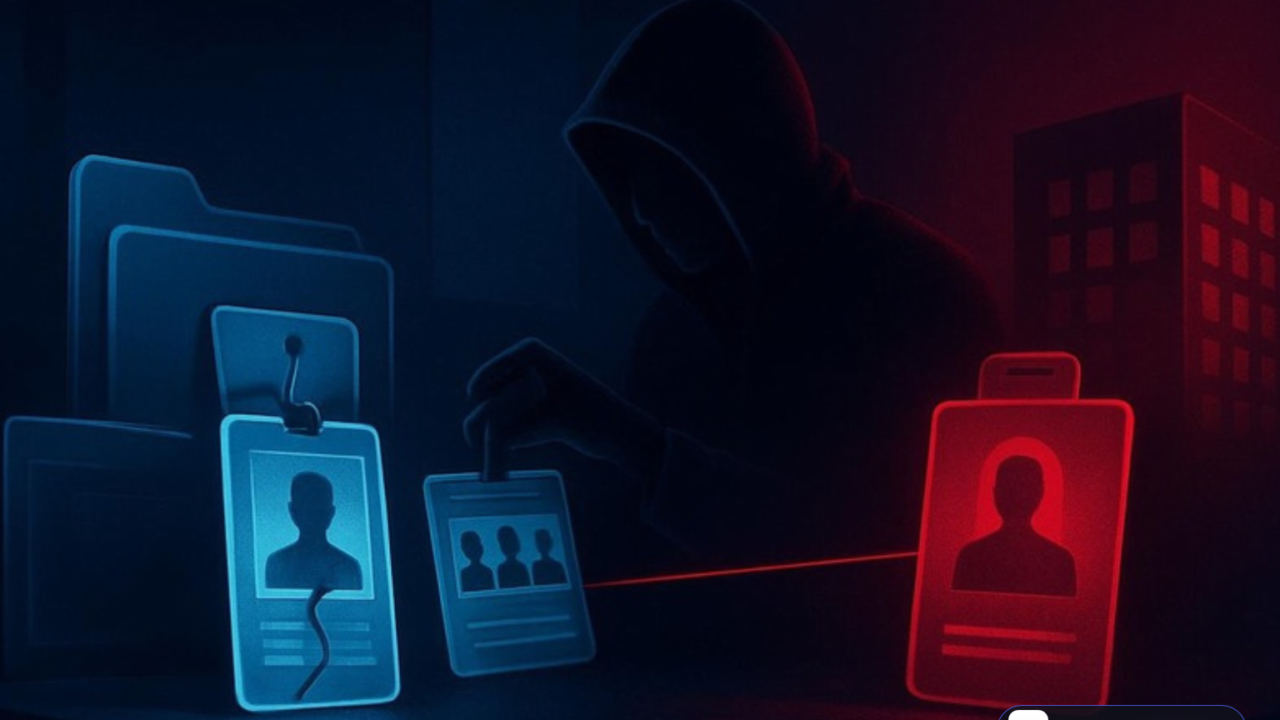
- After eviction: Cold Relic used email accounts posing as the first victim’s staff to target its employees and their professional contacts.
- 2026: Posing as an employee of the first organization, the group contacted a person at a second U.S. organization over a secure messaging app, shared a phishing link framed as a document about a technical issue, stole Microsoft Entra ID credentials and tokens, registered a new MFA device in the SSO system and bulk downloaded files from the user’s cloud drive. The messaging persona was then renamed, which Google suspects was to target more organizations in the same circle.
As The Hacker News report on Cold Relic’s second U.S. breach notes, the second organization used Entra ID as its federated single sign-on provider for Google Workspace, so one stolen Entra ID login opened its Workspace data.
Who is behind it
Google attributes the activity to Cold Relic, which it links to Russian intelligence interests. The group was previously known as COLDRIVER and UNC4057, and is tracked by other vendors as Callisto, Gossamer Bear and Star Blizzard. No ransom or leak site is involved; this is espionage. Google says the group uses stolen emails and data to create authentic pretexts and impersonate real contacts when it moves to new targets.
Technical details
Attack vector: stolen credentials plus MFA fatigue against a Super Admin account, followed by trusted-relationship phishing against Entra ID. No software vulnerability or CVE has been reported in this campaign.
Techniques (MITRE ATT&CK mapping by Threatspedia based on Google’s description):
- T1078.004 Valid Accounts: Cloud Accounts (stolen Super Admin and Entra ID credentials)
- T1621 Multi-Factor Authentication Request Generation (MFA fatigue)
- T1098.005 Account Manipulation: Device Registration (rogue MFA device, passkeys)
- T1090 Proxy (residential proxy near the victim)
- T1566.002 Phishing: Spearphishing Link (document lure over a messaging app)
- T1530 Data from Cloud Storage (bulk drive downloads and Google Takeout exports)
- T1114.002 Email Collection: Remote Email Collection (OAuth inbox sync)
- T1562 Impair Defenses / T1070 Indicator Removal (deleting Alert Center notifications)
- T1199 Trusted Relationship (impersonating the first victim’s staff)
IOCs: The press coverage reviewed for this article did not list domains, IP addresses or file hashes. Check Google’s original report for any indicators it publishes.
Impact
Both victims lost large volumes of internal data. The first organization lost its full cloud drive contents, employee rosters and domain-wide data, which then became fuel for further phishing. The second lost files from a compromised user’s cloud drive. Google warns that by stealing personnel lists and operational documents, Russian intelligence can turn normal business conversations into attack paths against trusted partners. Any organization that works with a breached partner should treat messages from that partner’s staff with extra care, even after the partner says it has cleaned up. The full number of downstream targets is not known and the campaign may still be active.
What security teams should do now
- Review all Google Workspace Super Admin accounts. Keep them few, use phishing-resistant MFA (security keys or passkeys you control), and never use them for daily work.
- Audit registered devices, passkeys and MFA backup codes for every admin and high-value user. Remove anything you cannot tie to a known device, and revoke them during any incident, not just passwords and sessions.
- Turn on number matching or move away from push approvals to stop MFA fatigue attacks.
- Restrict or block Google Takeout for admin and sensitive accounts, and alert on large external file sharing.
- Alert on deletion or modification of Alert Center notifications and on admins querying audit logs outside change windows.
- Review OAuth grants that sync mail to external clients and remove unknown ones.
- In Entra ID, alert on new MFA method or device registration, and use Conditional Access to require compliant devices for SSO into Workspace.
- Brief staff that document links from known partner contacts over messaging apps can be lures. Verify through a second channel.
This is a developing story. Threatspedia will update this post if Google or the victims share indicators, victim identities or new targets.
What to do now
0 of 6 done
Questions readers ask
Who are the Cold Relic hackers?
Cold Relic is a Russia-linked cyber espionage group formerly tracked as COLDRIVER and UNC4057, also known as Callisto, Gossamer Bear and Star Blizzard. It targets government officials, defense contractors and NGOs in Europe and North America.
Which organizations did Cold Relic breach?
Google says Cold Relic breached two U.S.-based organizations, one in late 2025 and one in 2026. Neither organization has been named publicly.
How did Cold Relic bypass MFA?
It used stolen Super Admin credentials with repeated MFA push prompts until a user approved one, then registered its own device, passkeys and backup codes to keep access after resets.
How can I protect Google Workspace from Cold Relic?
Use phishing-resistant MFA for admins, audit and revoke unknown passkeys and devices, restrict Google Takeout, alert on deleted Alert Center notifications and verify partner links through a second channel.
Sources
One short email when something serious breaks.
Threatspedia covers major cyber threats only, verified against primary sources. Read our editorial policy, or report a correction.